I love reading but for me finishing a book isn’t the end – it’s the beginning of a whole post-reading ritual. I don’t immediately reach for the next title. Instead, I have a little system — part reflection, part tracking, part creativity — that helps me process what I’ve read and document my reading life in a way that feels intentional. Here is my post-reading routine.
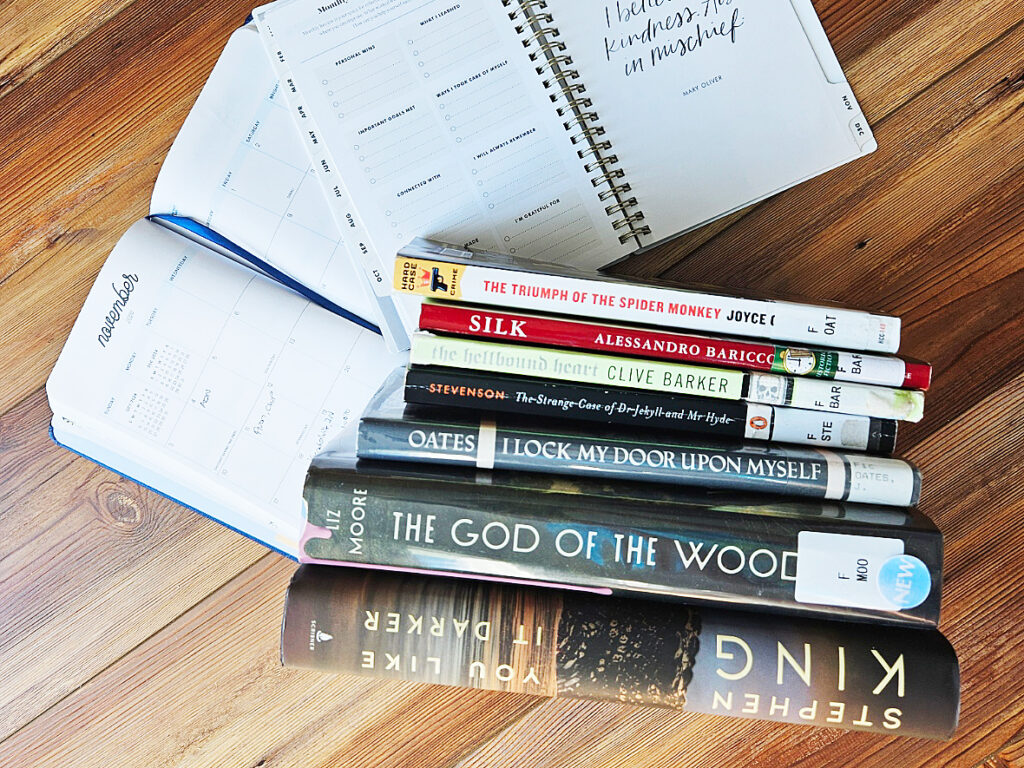
1. Sit With the Story
Before I open an app or update a spreadsheet, I take a few quiet minutes just to think.
What did I feel?
Did the ending satisfy me?
Is there a character I’m not ready to leave behind?
Did it change the way I see something?
This pause helps me process the book before outside opinions influence my thoughts.
2. Log the Book on Goodreads
Next stop – heading to my books on Goodreads and updating the status from currently reading to read. I also update tags (to track audiobook, eBook, novellas etc), add a star rating and write a review. My reviews are part reflection, part memory keeping. If I’m unsure how I feel, I might skim a few other reviews for inspiration — but I try to write my honest reaction first. Goodreads is my main record of everything I’ve read, so keeping it updated is essential to my book tracking system.
3. Update Reading Challenge Groups
If the book is for a reading challenge, I go to the tracking website. I’m currently doing our 2026 Key Word Reading Challenge and 2026 Motif Reading Challenge, both of which we host, so I do my updates at our Chapter Adventure Goodreads Reading Challenge group page and my Storygraph reading challenges page. While Goodreads holds my full reading history, I primarily use StoryGraph just to track books read for challenges. Using both platforms may sound redundant, and it is, but for now, they serve slightly different purposes.
4. Update My 2026 Reading Challenges Spreadsheet
We created a FREE to use 2026 Reading Challenges Spreadsheet and I’ve modified it to track a few more of my personal reading challenges – AtoZ (book title), AtoZ (author last name), BIPOC authors, Unread On My Shelves, Caribbean Author or setting, African author or setting, LitHub Best Books of 2025 and 2026 Award Winners. I could do all these challenges on Storygraph, but this helps me learn what updates the spreadsheet needs so I can provide it for other users.
5. Document It In My “Done” Book
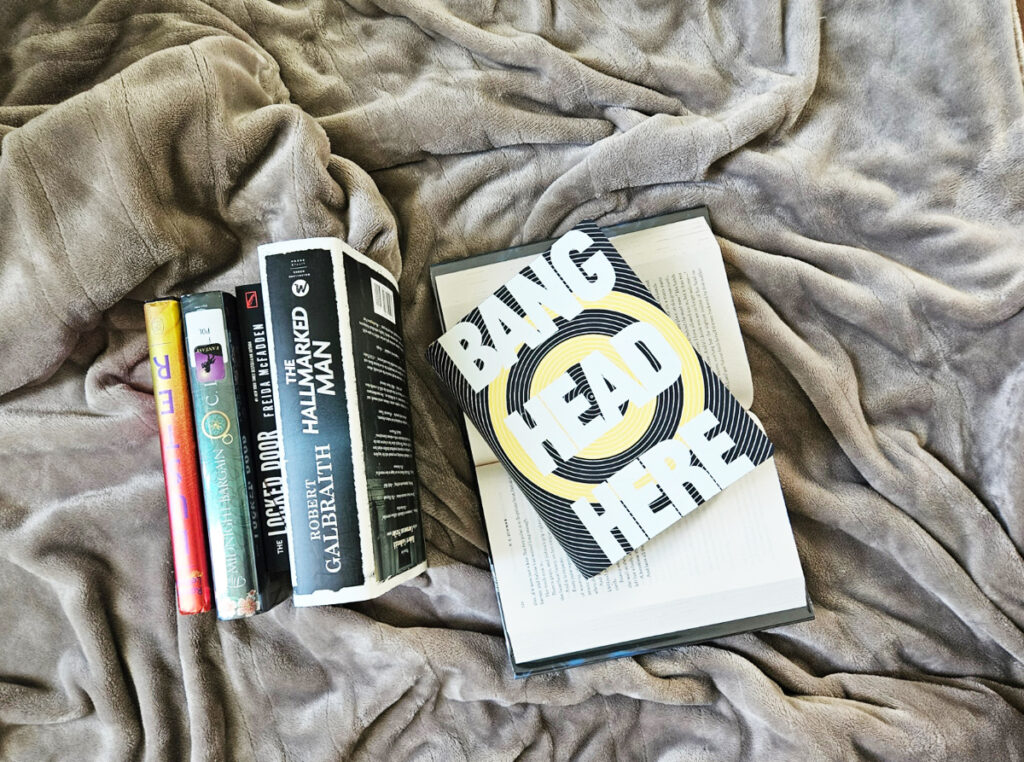
This might be my favorite step! I keep a physical “Done” book which is a hybrid junk journal / memory keeping book and I have a few book related pages in there. One where I write down all the books I’ve read and another where I document a small review of my feelings or thoughts on the book or characters. I use a Canon Mini to print a sticker of the book cover to go with the review.
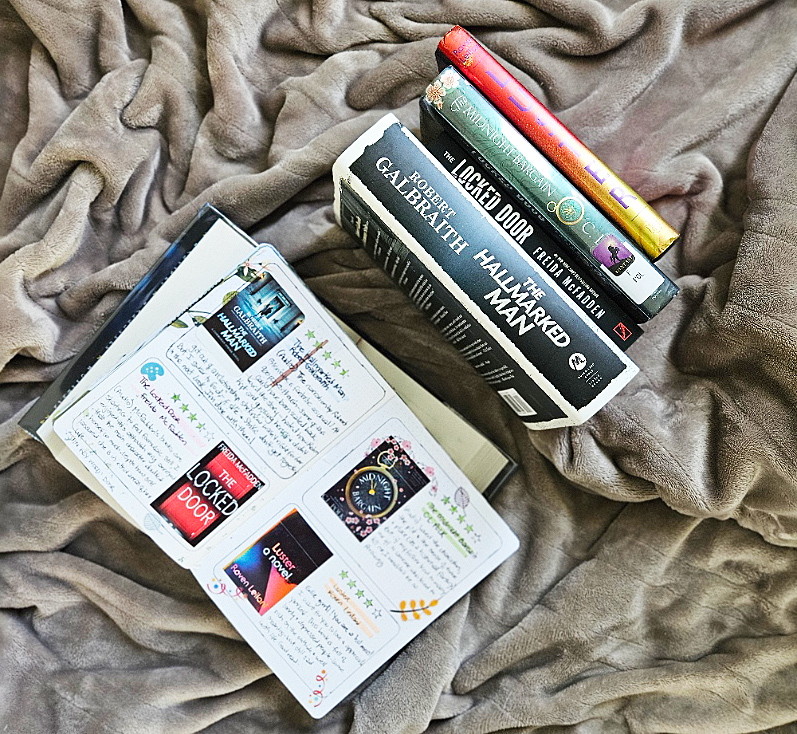
I also have a spread with book covers of 5 star reads, and another with favorite book of the month and a book bracket.
6. Log It on My Weekly Planner and Choose My Next Read
I write the finished book at the bottom of the weekly page in my Hobonichi Weeks planner with just the name and a the star rating. And that’s when I know it’s time to choose my next read. If the book moved me to completely abandon my “to be read” list and look for another book from that author, then that’s what I do. If I want to proceed with my next planned read, I pick a book from a short list of “reads “to be read” books that I keep on a page in my planner.
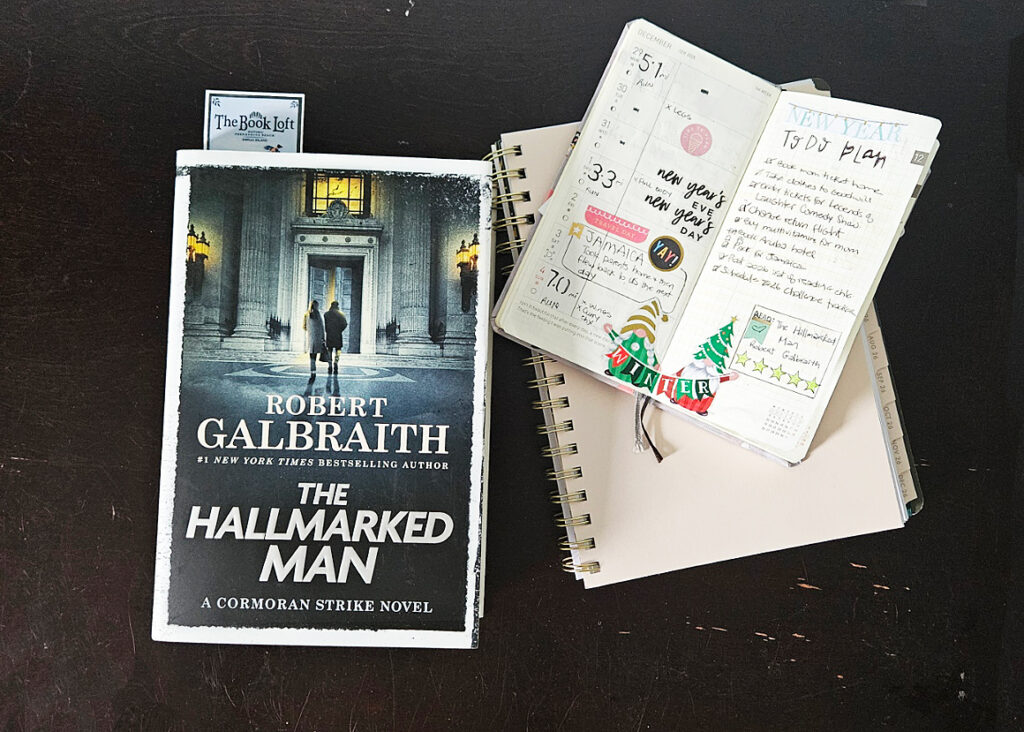
After reading a few pages to make sure I’m going to stick with the book, I head back to Goodreads, find the book and add the status “currently reading”.
—
This little system may look detailed, but it turns every book into an experience instead of just another title on a list. It helps me slow down, notice patterns in my reading life, celebrate favorites, and stay intentional about what I pick up next. Do you have a post-reading routine?


I am not disciplined enough to do all six steps, but I have a Hobonichi Weeks and keep a Zibaldone, and track my books in Goodreads and on a reading challenge tracker!! I just got done entering all my books read or DNF’d in Q1 because I’m so bad at keeping up with all my journals and logs and trackers.
I loved reading about your system so thank you for showing us and talking about it!